From Granny Midwives to Doulas: A Legacy of Black Birth Workers
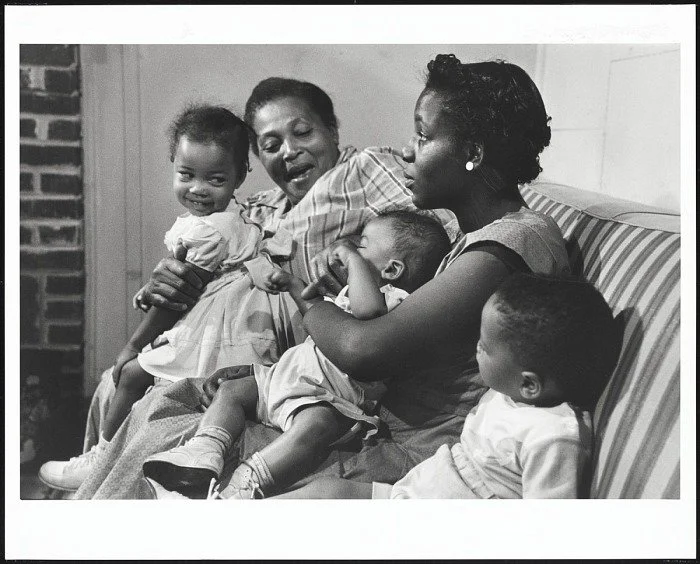
Collection of the Smithsonian National Museum of African American History and Culture, Gift of Robert Galbraith
Honoring the Black birth workers whose wisdom, care, and resistance continue to shape birth today.
Black History Month invites us to look beyond the versions of history we were taught and to honor the people whose labor, knowledge, and care built systems that still exist today. In birth work, that means naming a truth that often goes unspoken: modern maternity care in the United States stands on the foundation of Black midwives, healers, and community caretakers.
This post is about honoring that legacy. Not just as history, but as something alive, woven into today’s doula care, midwifery models, and the ongoing fight for safe, respectful births.
The Roots: Enslaved Midwives and Community Care
Long before obstetrics became a medical specialty, birth was community-centered. Enslaved African women carried ancestral knowledge of herbs, anatomy, labor support, and postpartum care; knowledge that sustained generations despite unimaginable violence and loss.
Enslaved midwives:
Attended births for both Black and white families
Provided prenatal, labor, postpartum, and infant care
Acted as healers, counselors, and protectors within their communities
Preserved African and Afro-Caribbean birthing traditions under oppression
Their work was not formally recognized, compensated, or protected, but it was essential. In many regions, they were the maternity care system.
Granny Midwives: The Backbone of Southern Birth Care
After emancipation, Black midwives, often called Granny Midwives, continued this legacy, especially in the rural South. Well into the early 20th century, they attended the majority of Black births and many white births as well.
Granny Midwives were known for:
Deep experiential knowledge passed down through generations
Holistic care that included nutrition, rest, emotional support, and spiritual grounding
Strong relationships with families and communities
Remarkably low maternal and infant mortality rates
These midwives were trusted, respected, and deeply embedded in the lives of the families they served.
Erasure Through Regulation and Racism
As hospitals and obstetrics grew in the early-to-mid 1900s, Black midwives were systematically pushed out, not because their care was unsafe, but because of racism, professional gatekeeping, and medicalization.
Key factors included:
Licensing laws designed to exclude Black and poor midwives
Public health campaigns that portrayed Granny Midwives as “untrained” or dangerous
Limited access to formal education and certification pathways
The rise of hospital birth as the “modern” and preferred option
This shift didn’t just remove providers; it dismantled community-based care models that had worked for generations and put birth in the hands of white men.
The Modern Doula Movement: A Continuation, Not a Trend
Today’s resurgence of doulas is not new. It is a continuation.
Modern doulas carry forward many of the same values Granny Midwives held:
Continuous, relationship-based support
Advocacy within systems that don’t always listen
Cultural understanding and shared lived experience
A belief that birth is not just medical, it is emotional, social, and deeply human
Black doulas are not filling a gap created by poor outcomes; they are reclaiming a role that was taken.
Why This Legacy Still Matters
Black maternal health disparities do not exist in a vacuum. They are connected to the loss of trusted community care, ongoing medical racism, and systems that often dismiss Black voices.
Research consistently shows that:
Continuous labor support improves birth outcomes
Culturally concordant care increases trust and communication
Feeling heard and respected during birth impacts both physical and mental health
Honoring the legacy of Black birth workers means recognizing that solutions already exist and have for a while.
What Honoring This Legacy Looks Like Today
Honoring Black birth workers is not just about remembering the past. It’s about action in the present.
That can look like:
Supporting and hiring Black doulas and midwives
Advocating for access to community-based birth care
Challenging narratives that center hospitals as the only “safe” option
Making space for traditional, ancestral, and holistic knowledge
Listening to Black families about what they need without defensiveness
A Living Lineage
From Granny Midwives to modern doulas, Black birth workers have always been here; protecting, advocating, teaching, and holding families through one of life’s most vulnerable moments. This is not a lost history. It is a living lineage. And it deserves to be named, respected, and supported, not just during Black History Month, but always.